

Pivotal Tracker logo
Sourcetable logo

Connect Pivotal Tracker to Sourcetable, and analyze project data with AI

You've never seen a spreadsheet do this before.

No credit card required
FREE PRO PLAN FOR 14 DAYS.
A B C D E
1
Task
Project
Due Date
Status
Assignee
2
API integration
Backend
2025-12-18
In Progress
Sarah
3
Design review
Frontend
2025-12-20
Complete
Michael
4
User testing
Product
2025-12-22
Not Started
Emma
5
Documentation
Engineering
2025-12-15
In Progress
James
6
QA testing
Quality
2025-12-19
Complete
Lisa
Tasks from Pivotal Tracker
Made with: Sourcetable Sourcetable

Use Pivotal Tracker, show me tasks due this week

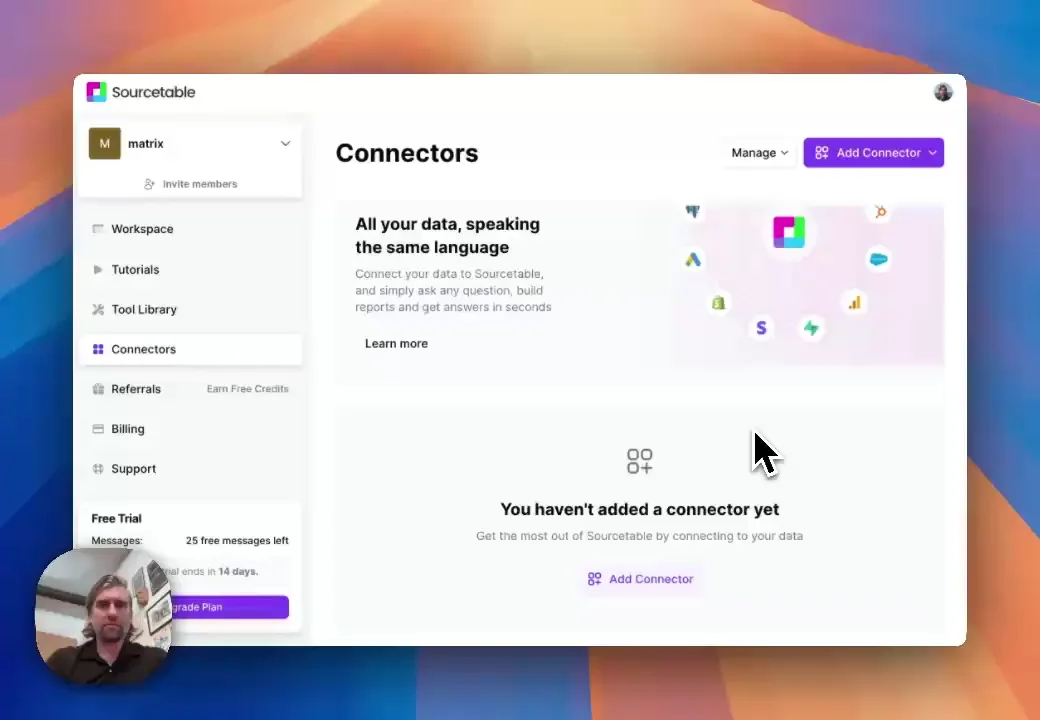
See how simple it is to connect...

...and analyze Pivotal Tracker data.

Managing Pivotal Tracker tasks required constant manual updates and status tracking. Now I analyze project data with natural language queries.

— Project Manager

Enterprise-grade Security

Your data is protected by industry-leading SOC 2 Type 2, HIPAA, and PCI compliance standards, whether in our cloud or on-premises.

Private User Keys

Private User Keys

Encrypted at REST

Encrypted at REST

Escrow KMS

Escrow KMS

Connectors

Connectors

Connect to any:

Database ⋆ API ⋆ MCP

Connectors

Recommended Connectors

Connect your most-used data sources and tools to Sourcetable for seamless analysis.

Frequently Asked Questions

If you question is not covered here, you can contact our team.

Contact Us
How do I connect Pivotal Tracker to Sourcetable?
Connect your Pivotal Tracker account to Sourcetable by clicking "Start connecting" and authenticating with your Pivotal Tracker credentials. Once connected, you can analyze project data, create visualizations, and build reports directly from your spreadsheet using natural language commands.
What can I do with the Pivotal Tracker connector?
The Pivotal Tracker connector lets you analyze project data, create custom reports, track key metrics, and build automated dashboards. You can analyze your Pivotal Tracker data using plain English and Sourcetable will fetch and analyze the data automatically.
Can I analyze my Pivotal Tracker data with AI?
Yes! You can analyze your Pivotal Tracker data using plain English queries. Ask questions like "Show me tasks due this week" and Sourcetable's AI will analyze your Pivotal Tracker account and create visualizations automatically.
Is my Pivotal Tracker data secure?
Yes. Sourcetable uses industry-standard OAuth 2.0 authentication and encryption to connect to your Pivotal Tracker account. Your credentials and data are encrypted both in transit and at rest. We follow enterprise security best practices and you maintain full control over your Pivotal Tracker account permissions.
How often does my Pivotal Tracker data sync with Sourcetable?
Your Pivotal Tracker data syncs automatically when you run a query or fetch data. You can manually refresh at any time to get the latest information. This ad-hoc approach means you always work with current data while maintaining control over when data is fetched.
How is this different from exporting Pivotal Tracker data to Excel or CSV?
Unlike static CSV exports, Sourcetable connects directly to your live Pivotal Tracker data. You can query current data using natural language without writing SQL, create dynamic dashboards that update on-demand, and analyze trends across any time period instantly. No more downloading files, copying data between spreadsheets, or manually updating reports.
Can I import historical Pivotal Tracker data from before I connected?
Yes! When you connect Pivotal Tracker to Sourcetable, you can access all historical data available in your Pivotal Tracker account. Specify date ranges in your queries like "Show me all data from the past 2 years" and Sourcetable will fetch the historical records from Pivotal Tracker's API.
How does Sourcetable replace my manual Pivotal Tracker reporting workflows?
Instead of waiting for scheduled reports or manually exporting CSVs, you can run any analysis instantly whenever you need it. Ask questions on-demand and get answers in seconds. Save your most common queries as templates, share them with your team, and build dashboards that anyone can refresh with a click. This ad-hoc approach means you're never waiting for reports - you create insights when you need them.
What data sources does Sourcetable support?
We currently support a variety of data file formats including spreadsheets (.xls, .xlsx, .csv), tabular data (.tsv), JSON, and database data (MySQL, PostgreSQL, MongoDB). We also support application data like Pivotal Tracker and most plain text data. View all available connectors at sourcetable.com/connectors.
Can I generate data visualizations?
Yes! It's very easy to generate clean-looking data visualizations using Sourcetable. Simply prompt the AI to create a chart or graph. For Pivotal Tracker data, you can create charts showing trends, distributions, comparisons, and more. All visualizations are downloadable and can be exported as interactive embeds.
What data science tools are available?
Sourcetable's AI analyzes and cleans data without you having to write code. Use Python, SQL, NumPy, Pandas, SciPy, Scikit-learn, StatsModels, Matplotlib, Plotly, and Seaborn to analyze your Pivotal Tracker data and create insights.
Is this free?
Yes! Sourcetable's spreadsheet is free to use, just like Google Sheets. AI features have usage limits. Users can upgrade to the Pro plan for more credits.
Is there a discount for students, professors, or teachers?
Students and faculty receive a 50% discount on the Pro and Max plans. Email support@sourcetable.com to get your discount.
Is Sourcetable programmable?
Yes. Regular spreadsheet users have full A1 formula-style referencing at their disposal. Advanced users can make use of Sourcetable's SQL editor and GUI, or ask our AI to write Python code for you.
Sourcetable Logo
Sourcetable + Pivotal Tracker

Turn your data into actionable insights.

Drop CSV