

Optimize Every Step of Your Customer Purchase Journey
Transform customer behavioral data into actionable insights. Map complete purchase paths, identify conversion bottlenecks, and optimize every touchpoint with AI-powered journey analysis that drives revenue growth.
Turn Customer Behavior Into Revenue Growth
Every customer follows a unique path from awareness to purchase. Understanding these journeys—the touchpoints, decision triggers, and friction points—is crucial for optimizing conversion rates and maximizing customer lifetime value. Customer purchase journey analysis provides the roadmap to transforming browsers into buyers.
Traditional funnel analysis shows where customers drop off, but it doesn't explain why or how to fix it. Modern journey analysis goes deeper, tracking multi-channel interactions, time between touchpoints, content engagement, and behavioral signals that predict purchase intent. This comprehensive view reveals optimization opportunities invisible to conventional analytics.
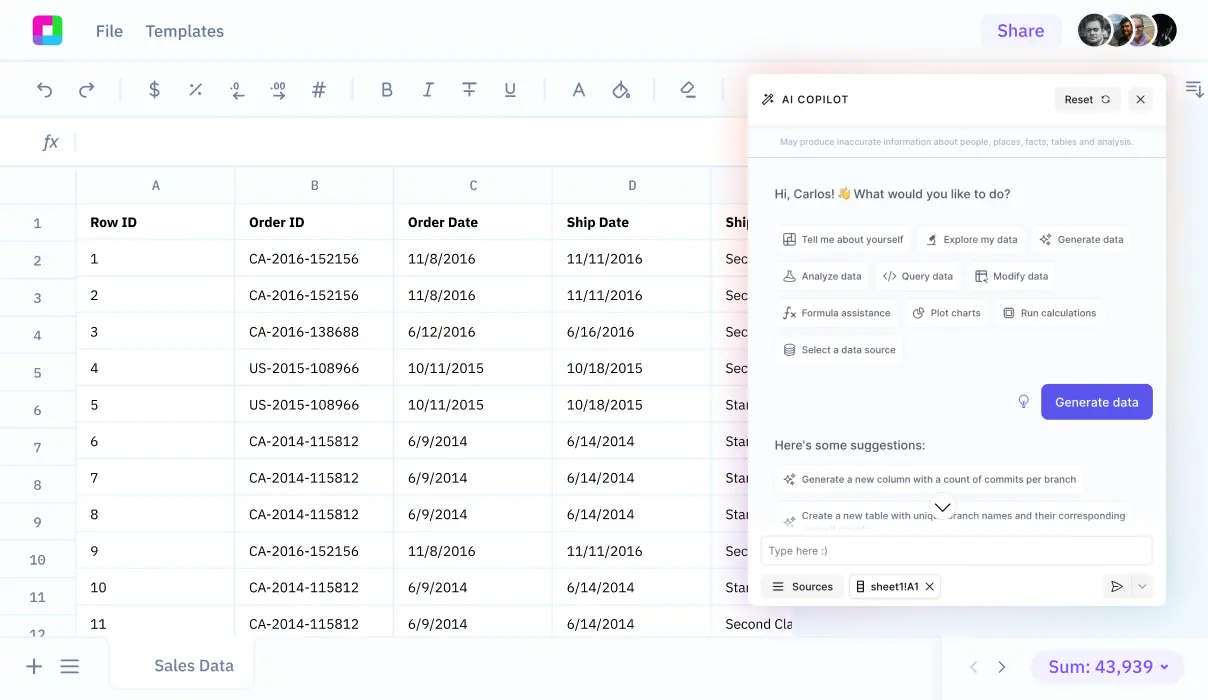
Sourcetable's AI-powered journey analysis handles the complexity of modern customer paths. Whether customers interact via email, social media, website visits, or support channels, our platform unifies disparate data sources and identifies the patterns that drive conversions. Transform scattered behavioral data into clear, actionable strategies for growth.
Why Customer Journey Analysis Drives Results
Transform customer behavioral data into actionable insights that drive revenue growth
Identify High-Impact Optimization Opportunities
Discover which touchpoints and interactions have the greatest influence on purchase decisions. Focus optimization efforts where they'll generate maximum ROI rather than guessing which changes to prioritize.
Reduce Cart Abandonment
Understand why customers abandon purchases at specific stages. Identify friction points in the checkout process, pricing concerns, or missing information that causes drop-off—and implement targeted solutions.
Personalize Customer Experiences
Segment customers based on journey patterns and behavioral signals. Deliver personalized content, offers, and recommendations at the right time to the right audience, dramatically improving conversion rates.
Optimize Multi-Channel Attribution
Understand how different marketing channels work together to drive conversions. Allocate budget more effectively by identifying which touchpoint combinations produce the highest-value customers.
Customer Journey Analysis Applications
See how different businesses leverage journey analysis to optimize conversions and maximize revenue
E-commerce Conversion Optimization
Map the complete path from product discovery to purchase. Identify where customers research products, which content influences decisions, and what triggers checkout completion. Optimize each stage for maximum conversion.
Cart Abandonment Recovery
Analyze abandonment patterns to understand timing, triggers, and customer segments most likely to abandon. Implement targeted email sequences, retargeting campaigns, or incentive strategies based on behavioral data.
Subscription Service Onboarding
Track the journey from trial sign-up to paid conversion. Identify activation triggers, feature adoption patterns, and engagement milestones that predict long-term retention. Optimize onboarding flows to maximize paid conversions.
B2B Sales Cycle Analysis
Map complex, multi-stakeholder purchase journeys with long sales cycles. Understand content consumption patterns, demo requests timing, and decision-maker engagement that correlates with closed deals.
Customer Journey Analysis Workflow in Sourcetable
Follow this proven framework to implement data-driven journey analysis and optimize customer conversions
Integrate Data Sources
Connect your e-commerce platform, CRM, marketing automation, analytics tools, and support systems. Sourcetable unifies data from all customer touchpoints into a single, coherent view.
Map Customer Touchpoints
Automatically identify and categorize every interaction—website visits, email opens, social media engagement, support tickets, purchases, and more. Build comprehensive journey maps showing the complete customer experience.
Identify Conversion Drivers
Use AI to determine which touchpoints, content pieces, and interactions have the strongest correlation with conversion. Understand not just what customers do, but what drives them to buy.
Test and Optimize
Implement changes based on journey insights and measure their impact. A/B test different touchpoint sequences, content variations, and intervention strategies to continuously improve conversion rates.
Essential Metrics for Journey Analysis
Journey Completion Rate
The percentage of customers who complete the desired journey from first touchpoint to conversion. This foundational metric reveals overall funnel health and provides a baseline for measuring optimization impact.
Average Touchpoints to Conversion
How many interactions typically occur before purchase? Understanding this helps set realistic expectations for sales cycles and informs marketing investment decisions. Shorter paths often indicate strong product-market fit or effective targeting.
Time to Conversion
The elapsed time from first awareness to purchase completion. Analyze by segment to understand different buyer urgencies. Long time-to-conversion suggests opportunities for nurture campaigns or addressing purchase barriers.
Drop-Off Rate by Stage
Where do customers exit the journey? High drop-off at specific stages signals problems requiring immediate attention. Benchmark against industry standards to identify underperforming touchpoints.
Channel Mix and Sequencing
Which channels contribute to successful conversions and in what order? Understanding the role of each channel—from awareness-generating social media to conversion-driving email—enables smarter marketing investment.
Return Visitor Conversion Rate
How many visits does it take before customers convert? High-converting journeys often involve multiple research visits. This metric helps distinguish between one-time browsers and serious prospects building purchase confidence.
Assisted Conversion Value
The revenue attributed to touchpoints that don't get final-click credit but influenced the purchase decision. This reveals the true value of awareness and consideration-stage activities.
Proven Journey Optimization Strategies
Reduce Friction at High-Drop-Off Points
When journey analysis reveals specific stages with abnormally high abandonment, investigate the causes. Common culprits include technical issues (slow loading, broken links), unclear value propositions, unexpected costs, or requesting too much information too soon. Simplify, clarify, and remove barriers.
Implement Trigger-Based Interventions
Use behavioral signals to deploy timely interventions. If customers who view pricing pages without checking out have a low conversion rate, trigger a chat offer or send an email with social proof. Target interventions to specific journey patterns for maximum relevance.
Personalize Content by Journey Stage
Awareness-stage visitors need educational content, not aggressive sales pitches. Consideration-stage prospects want detailed comparisons and specifications. Purchase-ready customers need streamlined checkout and reassurance. Match content to journey stage for better engagement and conversion.
Optimize Channel Sequencing
Journey analysis reveals which channel combinations work best. If customers who engage via social media, then email, then website have higher conversion rates than other sequences, structure your campaigns to replicate this winning pattern.
Create Re-Engagement Campaigns
Identify customers who started but didn't complete high-value journeys. Design specific re-engagement campaigns addressing likely abandonment reasons. Cart abandoners might need a discount code; demo no-shows might need scheduling flexibility.
Test Journey Variations
Don't assume the current journey is optimal. Test alternative sequences, touchpoint orders, and content variations. A/B test different onboarding flows, email nurture sequences, or landing page experiences to discover what drives better outcomes.
Frequently Asked Questions
How is customer journey analysis different from basic funnel analysis?
Funnel analysis shows a linear path with conversion/drop-off rates at each stage. Journey analysis captures the full, often non-linear reality: multiple visits, cross-channel interactions, backtracking, and varied paths to conversion. It reveals not just where customers drop off, but why, and how different journey patterns correlate with outcomes.
What data sources do I need for effective journey analysis?
At minimum, you need website analytics and transaction data. For comprehensive analysis, integrate your CRM, email marketing platform, advertising channels, support tickets, and any other customer touchpoint systems. The more data sources you connect, the more complete your journey view becomes.
How long does it take to gather enough data for meaningful insights?
It depends on traffic volume. High-traffic sites can generate actionable insights within 2-4 weeks. Lower-traffic businesses may need 2-3 months to accumulate sufficient data for statistically significant patterns. Start analyzing immediately—early insights often reveal obvious quick wins even with limited data.
Can I track journeys across devices and sessions?
Yes, with proper user identification. Logged-in users are trackable across devices and sessions. For anonymous visitors, use cross-device tracking technologies, email links with tracking parameters, and probabilistic matching. Sourcetable's AI helps stitch together fragmented journey data into coherent customer paths.
How do I handle journeys that involve offline touchpoints?
Integrate point-of-sale systems, in-store tracking (via loyalty programs), phone call logs, and direct mail campaign data. Use unique promo codes or QR codes to bridge offline-to-online interactions. While offline tracking is more challenging, omnichannel analysis provides tremendous insights into integrated customer experiences.
What should I do first after identifying a problematic journey stage?
Start with qualitative research. Review session recordings, conduct user testing, or survey customers who dropped off at that stage. Quantitative journey data tells you where problems exist; qualitative research explains why. Combined insights enable more effective solutions than data alone.
Related Analysis Guides
Connect your most-used data sources and tools to Sourcetable for seamless analysis.

Frequently Asked Questions
If your question is not covered here, you can contact our team.
Contact UsHow do I analyze data?
What data sources are supported?
What data science tools are available?
Can I analyze spreadsheets with multiple tabs?
Can I generate data visualizations?
What is the maximum file size?
Is this free?
Is there a discount for students, professors, or teachers?
Is Sourcetable programmable?

Ready to Transform Customer Experiences?
Join thousands of businesses using journey analysis to optimize conversions and maximize customer lifetime value. Start analyzing customer paths with AI today.