

Transform Banking Data Into Actionable Intelligence
Unlock the power of transaction pattern analysis with AI-driven insights. Detect anomalies, understand customer behavior, and strengthen compliance—all within a secure, familiar spreadsheet environment.
Why Banking Transaction Pattern Analysis Matters
Picture this: Your fraud detection system is drowning in false positives while actual suspicious transactions slip through. Customers are frustrated by blocked legitimate purchases, and your compliance team is buried in manual reviews.
That's where comprehensive banking transaction pattern analysis becomes your competitive advantage. By understanding normal transaction patterns and identifying meaningful deviations, you can protect customers, ensure compliance, and deliver better banking experiences.
Transform Your Banking Operations
Discover how intelligent transaction analysis revolutionizes financial services
Enhanced Fraud Detection
Identify suspicious patterns before they become major losses. AI-powered analysis detects anomalies in real-time, reducing false positives by up to 60% while catching more actual fraud.
Regulatory Compliance
Streamline compliance reporting with automated pattern recognition for AML, KYC, and suspicious activity monitoring. Generate audit-ready reports instantly.
Customer Behavior Insights
Understand spending patterns, identify customer segments, and predict financial needs. Personalize services based on transaction history and behavioral trends.
Risk Management
Assess credit risk and payment probability by analyzing transaction velocity, balance patterns, and spending consistency across customer portfolios.
Critical Transaction Patterns to Monitor
Effective banking analytics requires monitoring the right patterns. Here are the critical indicators that separate secure operations from vulnerable ones:
Spending Behavior Patterns
Every customer has a unique transaction fingerprint. A regional bank discovered that by analyzing normal spending patterns, they could reduce false fraud alerts by 65% while improving detection accuracy.
Anomaly Indicators
Suspicious patterns often hide in plain sight. One major bank caught a sophisticated fraud ring by identifying coordinated transaction patterns across seemingly unrelated accounts.
Compliance Risk Signals
Regulatory requirements demand vigilance. These patterns help identify transactions that require further investigation or reporting.
Banking Transaction Analysis in Action
See how financial institutions leverage pattern analysis to protect customers and improve services
Fraud Prevention at Scale
A national bank with 5 million customers reduced fraud losses by $12M annually by implementing AI-powered pattern analysis. They identified unusual card usage patterns in real-time, blocking fraudulent transactions before completion while reducing false positives that frustrated legitimate customers.
AML Compliance Automation
A credit union automated 80% of their suspicious activity reporting by analyzing transaction patterns against regulatory requirements. What previously took compliance officers 200 hours monthly now takes 40 hours, with improved accuracy and complete audit trails.
Customer Segmentation & Personalization
A community bank discovered five distinct customer personas through transaction pattern analysis, enabling targeted product offerings. This data-driven approach increased product adoption by 35% and improved customer retention by understanding financial behaviors and needs.
Credit Risk Assessment
A lending institution enhanced their credit scoring models by incorporating transaction velocity and consistency patterns. By analyzing cash flow stability and spending behaviors, they reduced default rates by 18% while approving 12% more qualified applicants.
How to Implement Transaction Pattern Analysis
Follow this proven framework to establish effective banking analytics
Data Collection & Integration
Connect to core banking systems, payment processors, and fraud management platforms. Aggregate transaction data from multiple sources including cards, ACH, wire transfers, and mobile banking. Ensure data quality through validation and normalization processes.
Baseline Pattern Recognition
Establish normal behavior profiles for different customer segments and account types. Use historical data to identify typical transaction patterns including frequency, amounts, merchants, locations, and timing. Create statistical models that adapt as customer behaviors evolve.
Anomaly Detection & Alerts
Implement real-time monitoring that flags deviations from established patterns. Configure alert thresholds based on risk tolerance and regulatory requirements. Prioritize alerts by severity and potential impact to focus investigative resources effectively.
Investigation & Action
Provide analysts with contextual information about flagged transactions. Enable rapid investigation through visualization of related transactions and historical patterns. Automate responses for high-confidence scenarios while routing complex cases to human review.
Practical Transaction Analysis Examples
Let's walk through real scenarios where transaction pattern analysis makes a tangible difference.
Example 1: Detecting Card Fraud
A customer typically makes 5-8 transactions per day, averaging $45, primarily at gas stations, grocery stores, and restaurants within 10 miles of their home. Suddenly:
This pattern triggers an immediate alert. The card is temporarily blocked, and the customer is contacted. Fraud is confirmed—the customer's card was compromised. Potential losses of $8,000+ are prevented.
Example 2: Identifying Money Laundering
Analysis reveals a concerning pattern across multiple business accounts:
This layering pattern indicates potential money laundering. A Suspicious Activity Report (SAR) is filed, and investigators discover a sophisticated scheme moving illicit funds through seemingly legitimate business accounts.
Example 3: Predicting Customer Needs
Transaction analysis identifies a customer segment with specific patterns:
This pattern suggests growing families with renovation projects. The bank offers targeted home equity loans and family banking packages, resulting in 28% higher conversion rates than generic marketing campaigns.
Why Sourcetable Excels at Banking Transaction Analysis
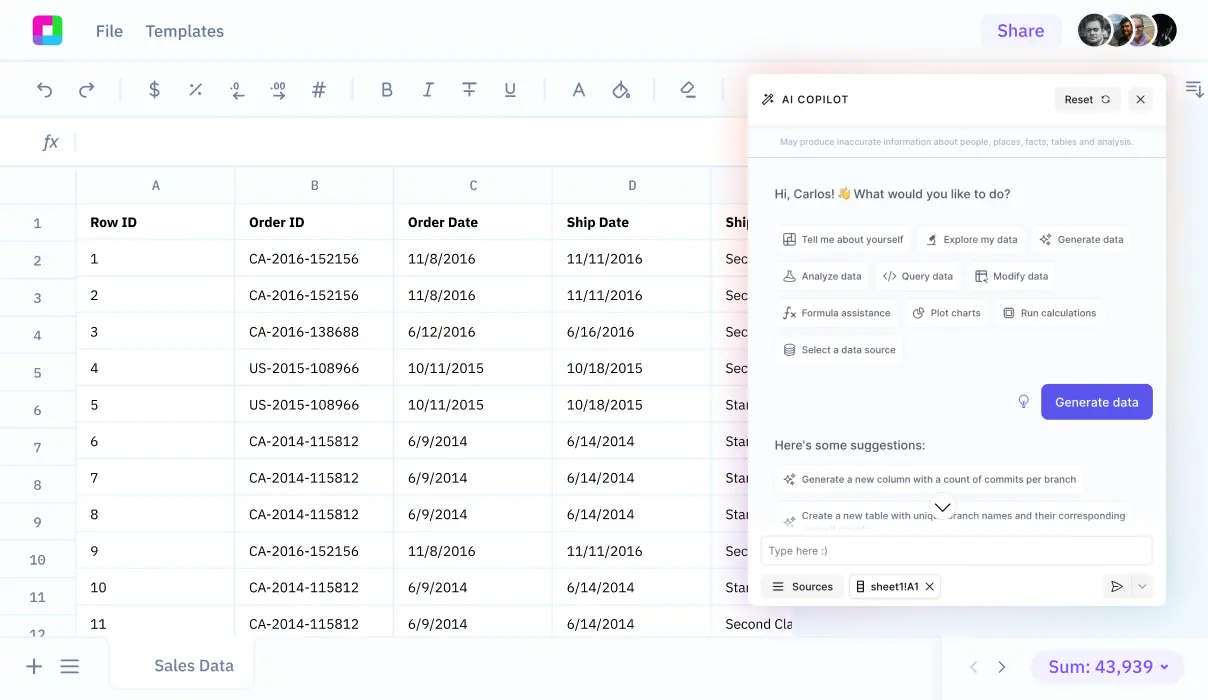
Traditional banking analytics tools are either too rigid or too complex. Sourcetable bridges the gap with AI-powered analysis in a familiar spreadsheet interface that banking professionals actually enjoy using.
Bank-Grade Security
Process sensitive transaction data with enterprise-level encryption and compliance controls. Your financial data stays in your secure environment while you gain powerful analytical capabilities.
Natural Language Queries
Ask questions like "Show me customers with unusual spending patterns this month" or "Find transactions over $5,000 from high-risk countries." Get instant answers without writing complex SQL queries or building custom reports.
Regulatory Compliance Built-In
Generate SAR reports, track transaction thresholds, and maintain complete audit trails automatically. Templates align with banking regulations, making compliance reporting straightforward.
Real-Time Pattern Detection
Connect to live transaction feeds and get immediate alerts on suspicious patterns. The AI learns your institution's unique patterns, continuously improving detection accuracy while reducing false positives.
The result? Your team spends less time wrestling with technology and more time protecting customers and growing your business. It's like having a financial analyst and fraud detection specialist built into your spreadsheet.
Frequently Asked Questions
How does AI-powered pattern analysis differ from rule-based fraud detection?
Rule-based systems require manual configuration of specific conditions (e.g., 'flag transactions over $5,000 from Country X'). AI pattern analysis learns normal behaviors for each customer and identifies meaningful deviations automatically, catching sophisticated fraud that doesn't match predefined rules while reducing false positives from legitimate unusual activity.
What data do I need to start transaction pattern analysis?
At minimum, you need transaction records including amounts, dates, merchant/counterparty information, and account identifiers. Additional data like merchant categories, locations, and customer demographics significantly enhance analysis capabilities. Most banks can start with 3-6 months of historical data to establish baseline patterns.
How do you handle customer privacy and data security?
All analysis occurs within your secure environment using encrypted connections. We never store your transaction data on external servers. The system can operate with anonymized data for pattern analysis while maintaining the ability to investigate specific cases when needed. Full audit trails document all data access for compliance purposes.
Can this integrate with our existing core banking system?
Yes, we support connections to major core banking platforms including FIS, Jack Henry, Fiserv, and Temenos. We can also integrate with payment processors, fraud management systems, and custom databases through secure APIs or file transfers. Implementation typically takes 2-4 weeks depending on your infrastructure.
What compliance standards does the platform meet?
We maintain SOC 2 Type II certification and support compliance with regulations including BSA/AML, OFAC, KYC, GDPR, and PCI DSS. The platform includes built-in templates for suspicious activity reporting, transaction monitoring, and audit documentation aligned with regulatory requirements.
How quickly can we see results after implementation?
Many banks see initial value within the first week—identifying previously undetected patterns or streamlining compliance workflows. Full optimization of fraud detection and customer insights typically occurs within 30-60 days as the AI learns your specific transaction patterns and your team becomes proficient with the tools.
Frequently Asked Questions
If your question is not covered here, you can contact our team.
Contact UsHow do I analyze data?
What data sources are supported?
What data science tools are available?
Can I analyze spreadsheets with multiple tabs?
Can I generate data visualizations?
What is the maximum file size?
Is this free?
Is there a discount for students, professors, or teachers?
Is Sourcetable programmable?

Ready to transform your banking analytics?
Join leading financial institutions using AI-powered transaction analysis to detect fraud, ensure compliance, and deliver better customer experiences.